
Chandigarh, December 19, 2025
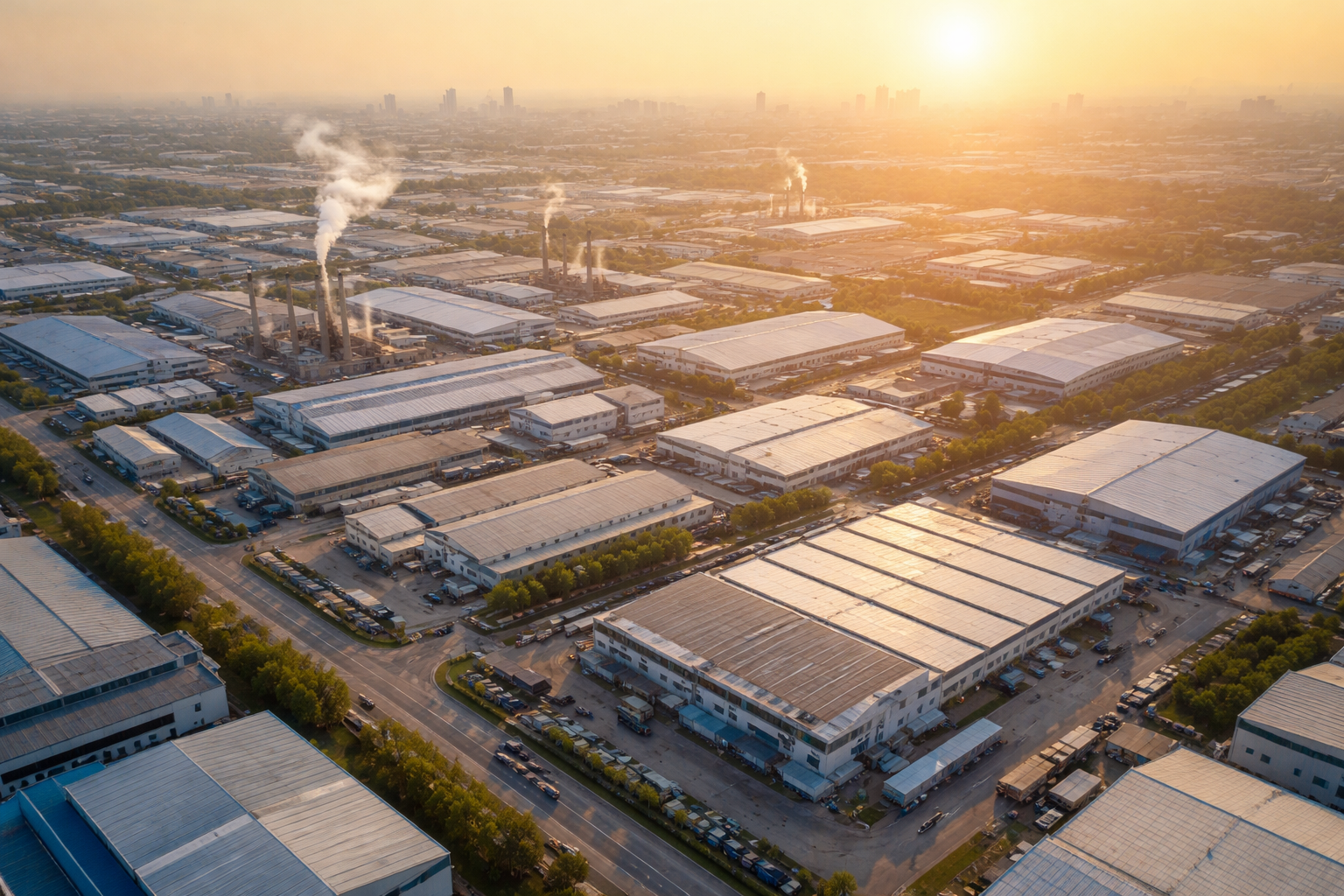
Yogesh Sharma – Haryana, formerly regarded as one of North India’s robust industrial regions, is experiencing a gradual decrease in the count of registered factories. Recent official statistics reveal a continual decline over the past few years, sparking worries about investment, job opportunities, and the long-term industrial viability of the state.
In contrast, neighboring Punjab has successfully maintained its industrial presence, while Haryana’s figures present a contrasting narrative.
According to recent estimates, Haryana had 10,389 registered factories in 2023-24, a decrease from 10,603 the previous year. This continues a multiyear drop that began in 2018-19, when the state had 11,835 factories. Over the next five years, the total number of factories will be reduced by around 1,446 – a loss of roughly 12.2% of the industrial base.
Haryana Factory Decline — Complete Data Overview
| Indicator | Haryana Value / Count | Comparison / Notes |
|---|---|---|
| Registered factories – 2018-19 | 11,835 | Peak count in five-year cycle |
| Registered factories – 2019-20 | ~11,200 (trend estimate) | RBI data shows annual decline |
| Registered factories – 2020-21 | ~10,900 (trend estimate) | Continued decline |
| Registered factories – 2021-22 | ~10,700 (trend estimate) | Gradual drop continues |
| Registered factories – 2022-23 | 10,603 | Govt reported figure |
| Registered factories – 2023-24 | 10,389 | Latest reported drop |
| Total decline since 2018-19 | –1,446 factories | Approx -12.2% drop |
| Punjab registered factories – 2023-24 | 13,166 | Slight decline vs prior year |
| Punjab change since 2018-19 | +341 factories | Growth over 5 years |
| Industrial estates in Haryana | 28 developed + 6 under construction | Total 34 |
| Total industrial plots | 18,077 | Across estates |
| Plots allotted | 15,518 | Majority allocated |
| Unallotted plots | 3,344 | ~1,841 acres unused |
| Disputed plots | 598 | Under contention |
| Total value of unallotted plots | ₹21,206 crore | Estimated current value |
| Key industries targeted for incentives | Auto, Agro, Textiles, Electronics, Defence, Pharma, Chemicals, Energy Storage | Focus sectors |
“A declining factory count reflects deeper challenges beyond simple numbers.”
Punjab maintained a higher number of factories and even added units over the last five years. In contrast, Haryana lost over 1,400 units during the same period.
Punjab Industrial Overview and Factory Statistics
| Indicator | Punjab Data | Details / Insight |
|---|---|---|
| Registered factories (2018-19) | ~12,825 | Strong base before recent years |
| Registered factories (2022-23) | 13,293 | Peak level in recent period |
| Registered factories (2023-24) | 13,166 | Minor year-on-year dip |
| Net change in 5 years | +341 factories | Overall growth maintained |
| Trend pattern | Largely stable | No sharp decline like Haryana |
| Dominant industrial segments | Textiles, machinery, food processing, light engineering | Traditional manufacturing strength |
| MSME presence | Higher than Haryana | Large number of small and micro units |
| Employment pattern | Labour-intensive | Supports regional job stability |
| Industrial land utilisation | Relatively better | Lower vacant industrial plot levels |
| Key industrial hubs | Ludhiana, Jalandhar, Mohali, Amritsar | Established clusters |
| Major challenge | Infrastructure modernisation | Growth pace slower, but steady |
Why Are Factories Declining in Haryana?
- Rising costs of doing business
Industrial land prices, labor costs, and compliance fees in Haryana have risen over time. Operating in the state has become more expensive for small and medium-sized manufacturers than in surrounding locations. - Weak Policy Conversion to Action
Although Haryana proposed a number of business-friendly initiatives, implementation has been patchy. Delays in approvals and inconsistent implementation have harmed investor trust. - Significant amount of idle industrial land
Thousands of industrial plots remain vacant, despite incentives. This implies poor investor demand, showing hesitancy in establishing new enterprises in the state. - Transfer of Units to Other States
Several manufacturing firms, especially MSMEs, have shifted to states that provide lower land costs, power subsidies, and faster permits, affecting Haryana’s economy.
Punjab’s Role in the Comparison
Punjab offers a significant contrast to Haryana’s downturn:
- The state has maintained a larger factory count over time.
- Its industrial base is more evenly distributed among MSMEs, especially in manufacturing sectors like as textiles, machinery, and food processing.
- Punjab has prioritized retaining established industries, even though large-scale new investments are slow.
This is not to say that Punjab is without problems, but it does exhibit stronger industrial stability than Haryana, which has recently experienced a decline.
Impact on Jobs and Economy
In Haryana, fewer factories directly impact:
- Employment prospects, particularly for semi-skilled people.
- Local supply networks and vendors
- State revenues and exports
If the decrease continues, Haryana’s status as a North Indian industrial hub may suffer in the long run.
“When factories close, it is not just production that slows, but opportunity itself.”
Haryana’s factory downturn was not unexpected; it is the result of growing costs, underutilized industrial land, and policy inadequacies. The comparison with Punjab demonstrates how industrial stability is as important as fresh investment announcements.
If corrective measures are implemented promptly, Haryana still has the infrastructure and location advantage to restore momentum. Without action, the state risks losing ground in India’s manufacturing boom story.
For more content and updates, visit our YouTube channel:
InfraTalks
To read more such Latest News
visit our Homepage