
New Delhi, December 22, 2025
Yogesh Sharma-
India opens doors to trade, not its dairy sector
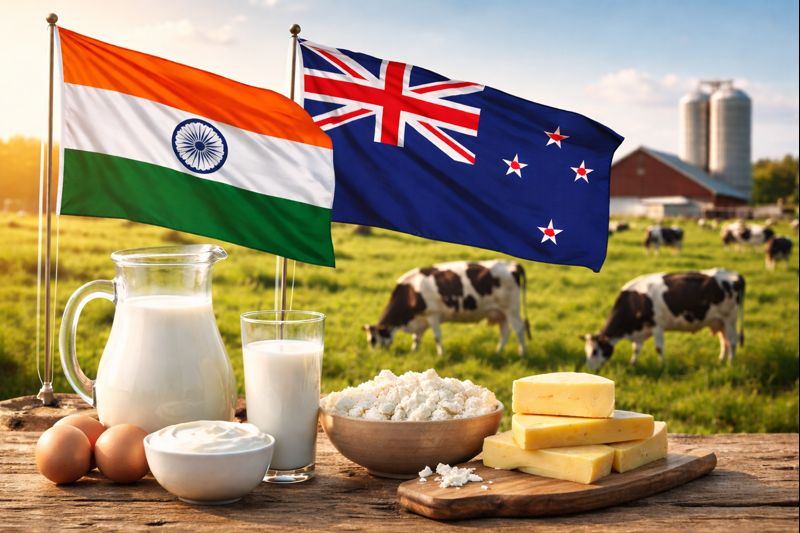
India and New Zealand have formally ended discussions on a Free Trade Agreement (FTA) to strengthen bilateral economic ties, with both countries anticipating growth and closer cooperation in products, services, and investment. The agreement is billed as a strategy to boost Indian exports and attract international investment, while purposely shielding certain sensitive local industries from outside competition.
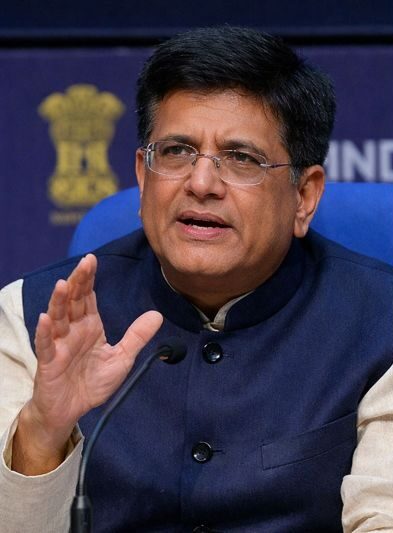
One of the most keenly observed components of the accord has been India’s stance on the dairy sector, which is politically sensitive but sustains millions of small farmers across the country. Union Commerce and Industry Minister Piyush Goyal set a firm red line on this problem during a media briefing following the deal’s announcement.
“We have been very sensitive to protect all the sectors, like farmers’ interest in rice, wheat, dairy, soya and various other farmer products, agricultural products, which have not been opened up with any access,” Goyal said, emphasizing New Delhi’s commitment to safeguarding local livelihoods.
Goyal made it clear that India will not open up its dairy sector under this FTA or any free trade arrangement, underscoring that liberalization in this area remains off limits due to the potential impact on domestic producers
The agreement with New Zealand, one of the world’s largest dairy exporters, does not include duty concessions for India’s dairy industry. According to government sources, no import tax cuts or market access terms for dairy have been agreed upon, with officials describing the industry as a “complete red line” in negotiations.
Despite this exclusion, the FTA opens up new opportunities for other sectors. New Zealand will eliminate tariffs on the vast majority of its tariff lines for Indian exports, while India is expected to provide phased tariff liberalization for many New Zealand products that do not fall into sensitive categories. The agreement also contains agreements to decrease trade barriers in services and strengthen investment links, including a reported $20 billion investment from New Zealand over the next 15 years.
India’s approach to this FTA reflects a broader goal of balancing trade expansion with the protection of critical local interests, particularly in sectors related to rural income and food security. While welcoming manufactured and services exports, New Delhi has frequently expressed its refusal to compromise on agricultural and dairy, areas where previous agreements have avoided significant compromises.
Outlook Business.
India’s decision to exclude dairy from the India-New Zealand free trade deal is consistent with its long-standing objective of protecting a sector that sustains millions of small farmers and cooperative networks across the country. Commerce Minister Piyush Goyal’s remarks highlight that this is not unique to New Zealand, as India has previously excluded dairy from all trade agreements, citing livelihood concerns, food security, and domestic sensitivities, while opting to open only sectors where Indian industry is internationally competitive.
The deal, which will be legally inked following legislative and legal processes in both countries, is the latest step in India’s efforts to diversify its trading partnerships in the face of shifting global economic conditions.
To read more such Latest News
visit our Homepage
Do Subscribe to our youtube channel InfraTalks