
6 January, 2026
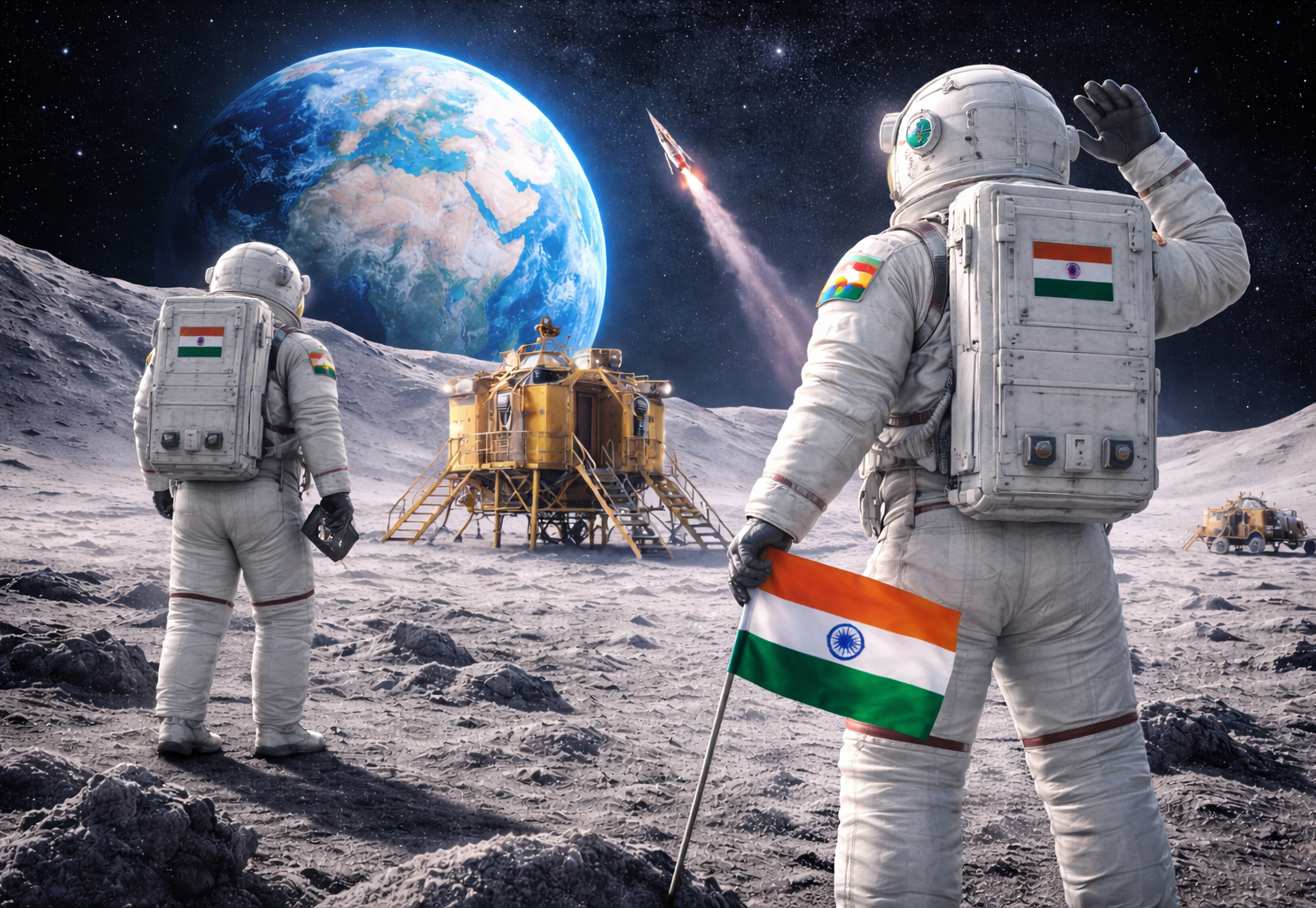
Yogesh Sharma- India is intensifying its human spaceflight ambitions with an ambitious goal to land Indian astronauts on the Moon by 2027. ISRO Chairman Dr. V. Narayanan made this announcement during the 74th annual convocation at Gujarat University in Ahmedabad. Dr. Narayanan presented a detailed mission plan to an audience of academics and students, highlighting the The Gaganyaan program is India’s first indigenous initiative for a crewed spacecraft. This program will be enhanced by advancements in launch systems currently under development.
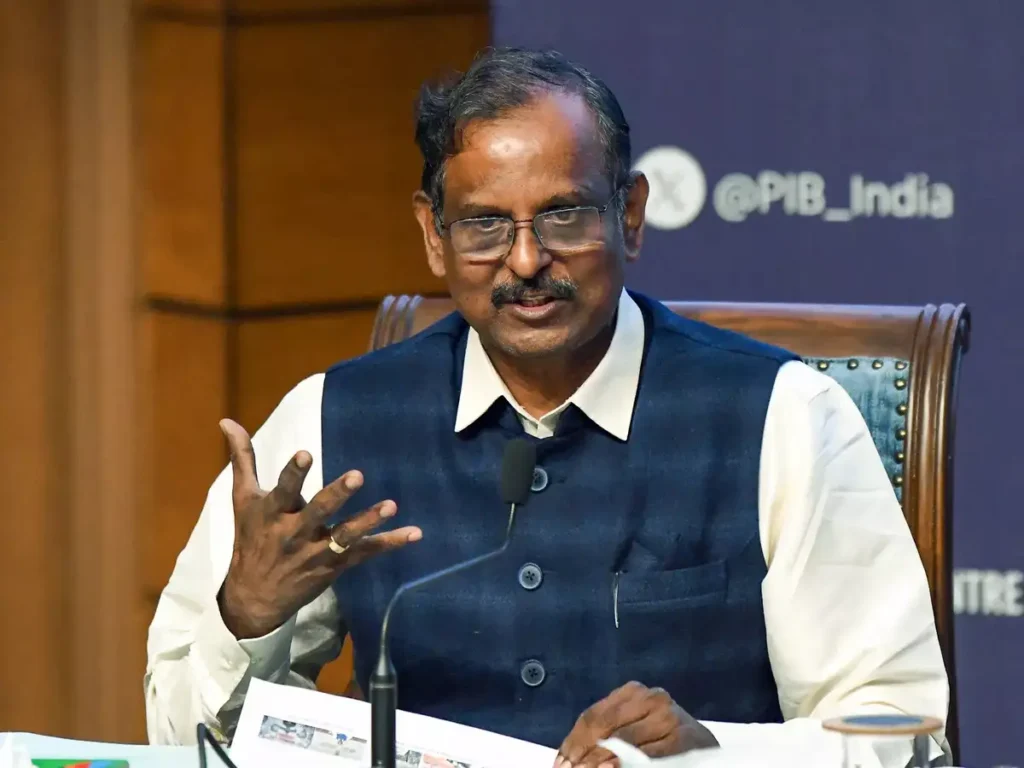
During the convocation, the ISRO chief announced that India aims to develop a spacecraft that can safely transport humans to the lunar surface and return them to Earth by 2027. This Moon-landing initiative is part of a broader long-term strategy, which also includes enhancing human missions in low Earth orbit and accelerating spacecraft production. Additionally, ISRO plans to undertake a series of robotic missions and upgrade launch infrastructure to facilitate more complex activities beyond Earth’s orbit.
The Gaganyaan mission is a key part of India’s aspirations for human spaceflight. It was originally announced by Prime Minister Narendra Modi on August 15, 2018, as India’s first initiative to send its own astronauts into orbit. The Indian Space Research Organisation (ISRO) has identified the current phase of the project as a crucial development period, with several uncrewed test flights scheduled for 2025 and 2026 to validate essential technologies.
The first uncrewed orbital test flight, set to launch in December 2025, will carry a half-humanoid robot named Vyomitra to simulate human conditions in space. This mission is part of a series of preparatory flights. Two additional uncrewed missions are planned to follow, which will include further orbital demonstrations and system validations throughout 2026.
Uncrewed missions are crucial for testing various systems, including life support, communications, the crew-capable LVM3 launch vehicle, the crew module, and re-entry procedures. Following these successful preparatory flights, ISRO plans to conduct its first crewed Gaganyaan mission in early 2027. This mission aims to send Indian astronauts into Low Earth Orbit (LEO) and ensure their safe return to Earth.
This updated schedule prioritizes thorough testing and safety over previous timelines.
Impact
If India successfully lands humans on the Moon by 2027, it will be a historic advancement for the country’s space program, positioning it among a select group of nations capable of crewed lunar exploration. This achievement would not only enhance India’s prestige but also drive innovation in aerospace engineering, robotics, human life-support technologies, and planetary science. Additionally, it has the potential to foster deeper international collaboration, as ISRO (the Indian Space Research Organisation) engages with global partners in lunar and deep space missions.
Narayanan emphasized that the advancements from the Gaganyaan program, such as human-rated systems and long-duration life-support technologies, will directly aid in future projects. These include the design of lunar landers, precision navigation, and operations in planetary environments, all of which are essential for achieving a Moon landing objective.
From low Earth orbit to lunar horizons , India’s journey in space is entering a defining era.
To read more such Latest News
visit our Homepage
Do Subscribe to our Youtube Channel InfraTalks