
December 26, 2025
New Delhi-
“Silent beneath the waves, powerful above the horizon.”
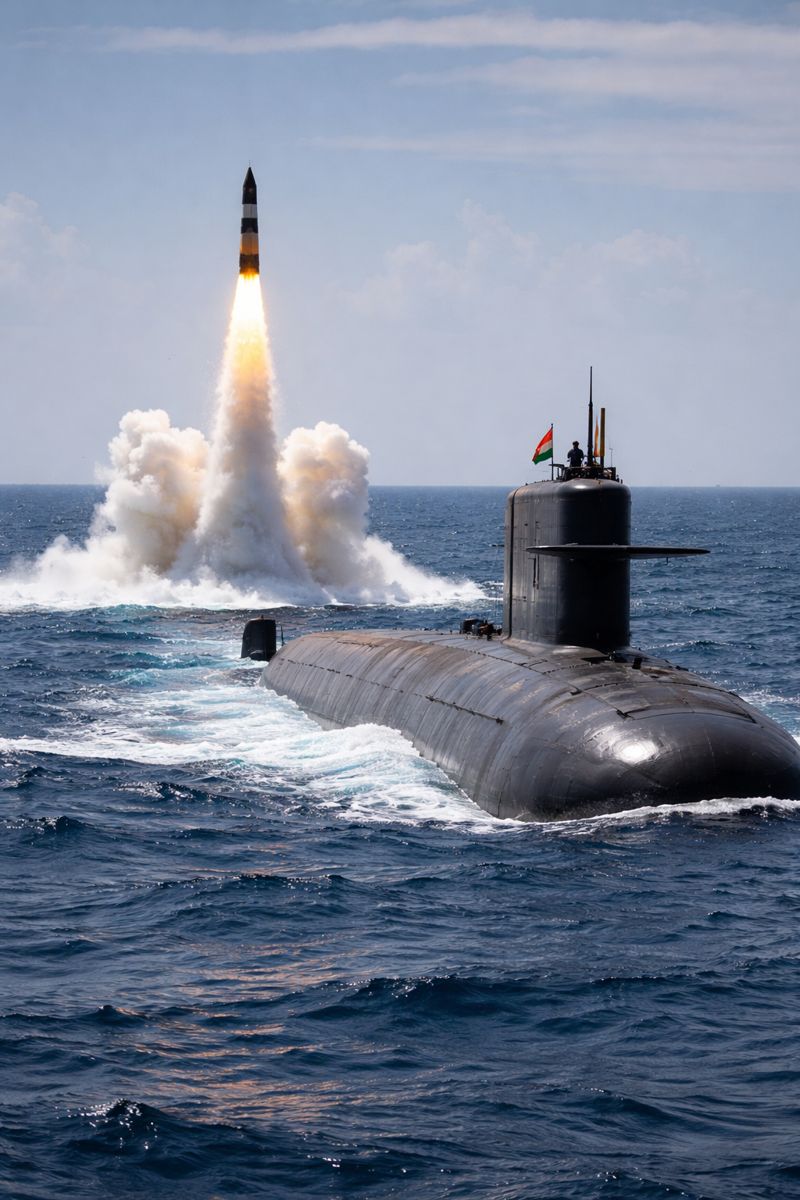
India has successfully launched the nuclear-capable K-4 submarine-launched ballistic missile (SLBM) from the nuclear-powered submarine INS Arighaat. The missile, fired from below in the Bay of Bengal, exhibited a range of around 3,500 kilometers, a significant step toward operationalizing India’s sea-based nuclear capability.
The K-4 missile idea is based on India’s long-term objective of a credible nuclear triad, which includes the ability to deploy nuclear warheads from land, air, and sea. While India currently has land-based missiles and air-delivered nuclear systems, these may be vulnerable during conflicts. Submarine-launched missiles, hidden deep underwater, are significantly more durable, providing a dependable second strike option. This resulted in the Advanced Technology Vessel (ATV) program and the creation of the K-series missiles by DRDO, with the K-4 bridging the gap between short-range systems and eventual longer-range SLBMs.
The K-4 test has a substantial strategic significance. By allowing submarines like INS Arighaat to carry missiles well inland, India improves its second-strike capabilities, discouraging any prospective adversary from launching a nuclear strike. The missile’s underwater launch capability, solid-fuel engine, and expanded range make it extremely effective, allowing it to be fired from stealthy, hidden platforms while being difficult to detect or intercept.
This test also demonstrates India’s growing technological self-sufficiency, as the missile and submarine integration were primarily produced domestically. With the K-4 operational, India is one step closer to having a fully complete nuclear triad, which will strengthen national security and regional strategic stability.
“Hidden in the depths, securing the nation’s future.”
For more in-depth coverage on India’s economy, governance, infrastructure, and policy updates, visit our Homepage for the latest articles and explainers updated daily.
You can also subscribe to our YouTube channel InfraTalks