
The National Institute of Water Sports (NIWS), located in Caranzalem, Goa, is a pioneering institutional campus dedicated to advancing water sports education, research, safety standards, and professional training in India. Designed by Ar. Manish Gulati of MOFA Studio and commissioned by the Ministry of Tourism, the project was completed in 2024 after emerging as the winning entry in an international design competition held in 2012. Conceived as both a world-class training facility and a civic landmark, NIWS reflects Goa’s deep connection to the sea while supporting the country’s growing marine tourism and adventure sports sector.
Set against Goa’s scenic coastline, the National Institute of Water Sports responds to the evolving demands of marine recreation, adventure tourism, and coastal safety. More than a conventional educational institution, the campus functions as a dynamic environment where learning, training, observation, collaboration, and recreation seamlessly coexist.
A Campus Inspired by Movement and the Sea
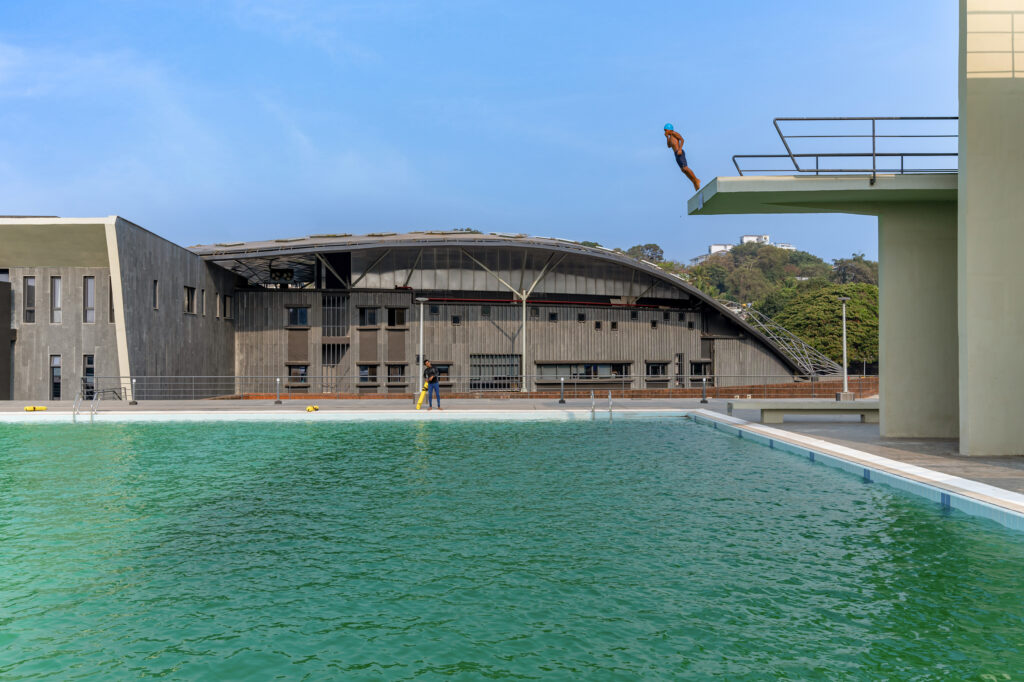
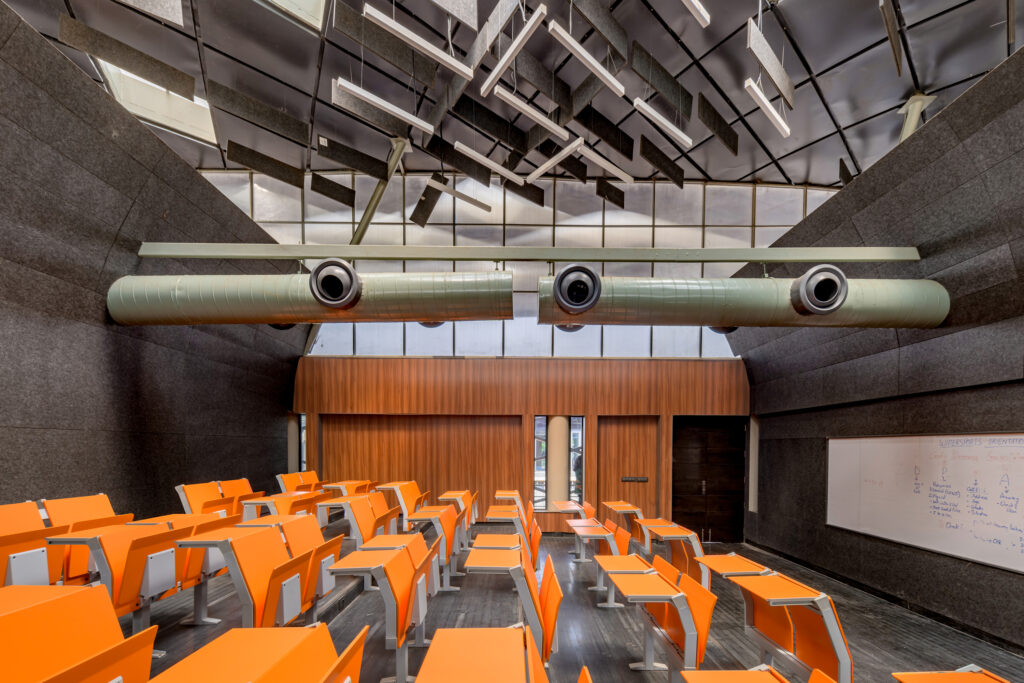
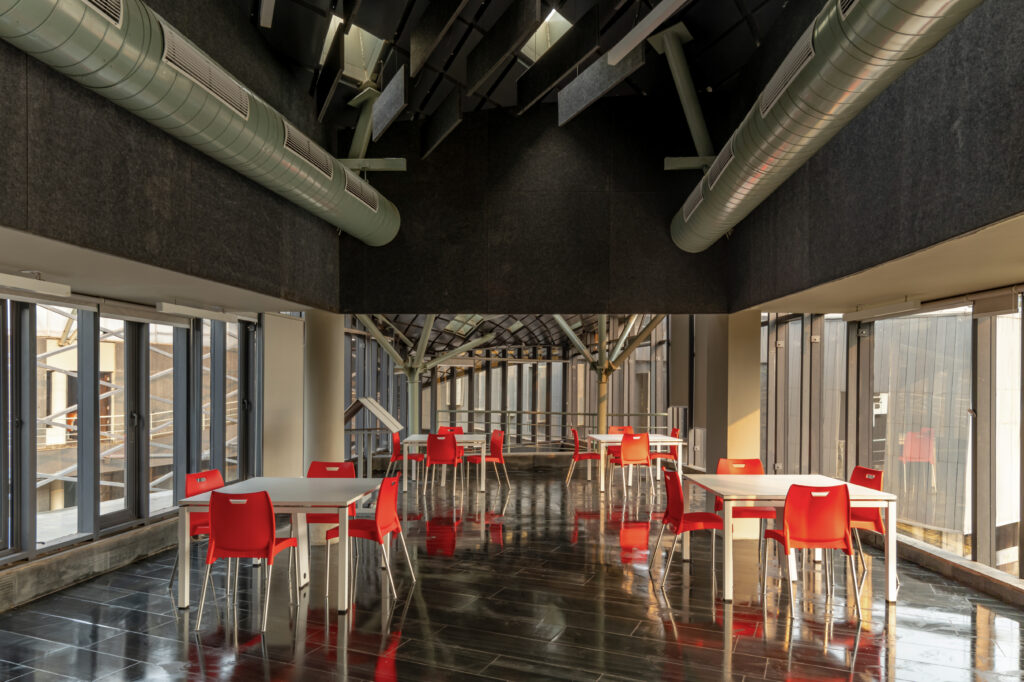
The design concept for NIWS draws inspiration from the energy and fluidity of water sports. Activities such as sailing, rescue operations, surfing, and marine training involve anticipation, teamwork, movement, and precision. These qualities have been translated into an architectural language that avoids static planning and instead creates a continuously evolving spatial experience.
Rather than separating academic spaces from practical training areas, the institute promotes a holistic learning environment. Students, instructors, lifeguards, tour operators, administrators, visiting experts, and researchers interact within shared spaces that encourage collaboration and knowledge exchange.
Masterplan Organized Around Four Functional Clusters
The campus is carefully organized into four primary zones:
- Academic and Institutional Facilities
- Administrative Buildings
- Residential Accommodation
- Recreational Areas
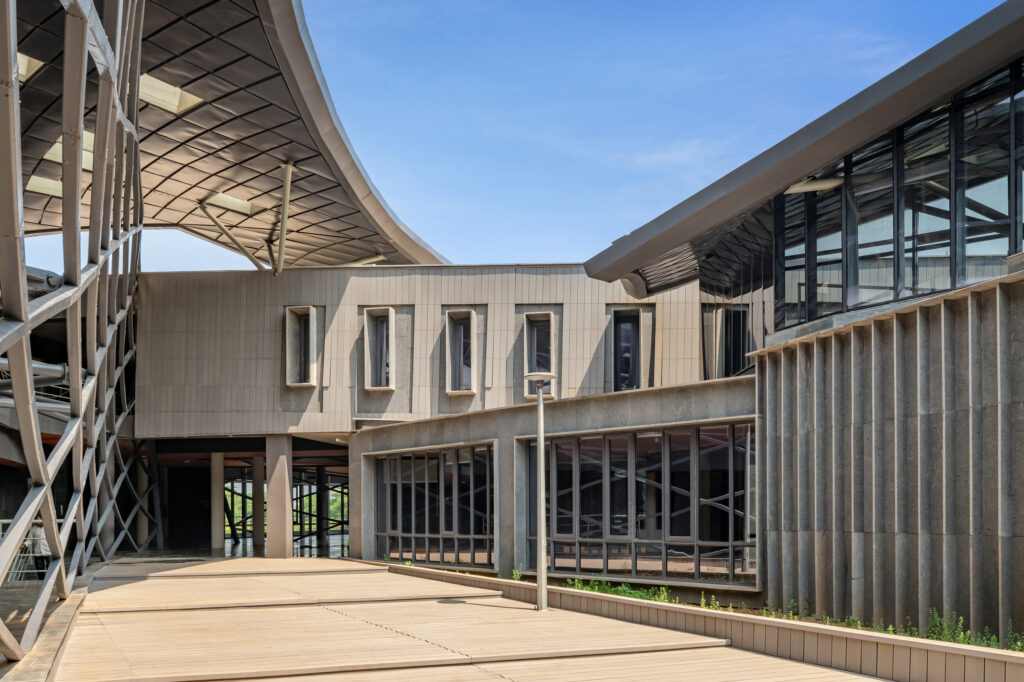
These clusters are connected through a network of transitional spaces that serve as the social heart of the campus. Shaded walkways, open courtyards, terraces, bridges, and gathering plazas create opportunities for informal learning and interaction.
These “in-between” spaces are intentionally designed rather than treated as leftover areas. They accommodate peer discussions, equipment inspections, training briefings, and everyday social engagement, extending learning beyond formal classrooms.
A Dynamic Spatial Experience
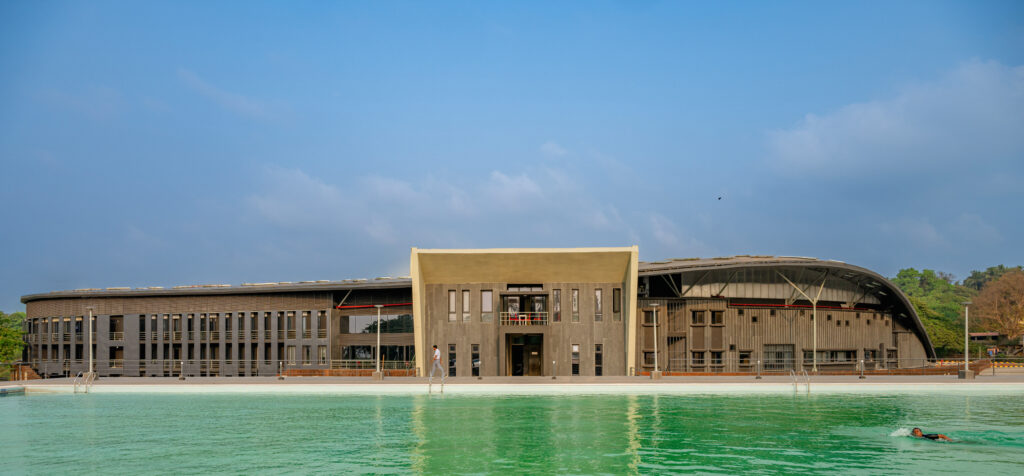
The movement through the campus is designed to mirror the psychological journey of preparing for open-water activities. A fluid circulation spine guides users through a sequence of spaces that alternate between compression and openness.
Strategically placed courtyards, bridges, plazas, and pause points reveal changing views of the sea, sky, and training grounds. This constant interplay of perspectives creates a sense of anticipation and forward momentum.
While the experience feels dynamic and exploratory, circulation remains intuitive and accessible. Primary pathways ensure efficient movement, while secondary routes offer shaded shortcuts and scenic viewpoints overlooking the campus and coastline.
Architecture Inspired by Trochoidal Wave Patterns
Conceptually, the architecture takes inspiration from trochoidal wave formations, translating the movement of ocean waves into built form. The buildings appear to rise, fold, and flow across the site while maintaining practical construction methods and long-term durability.
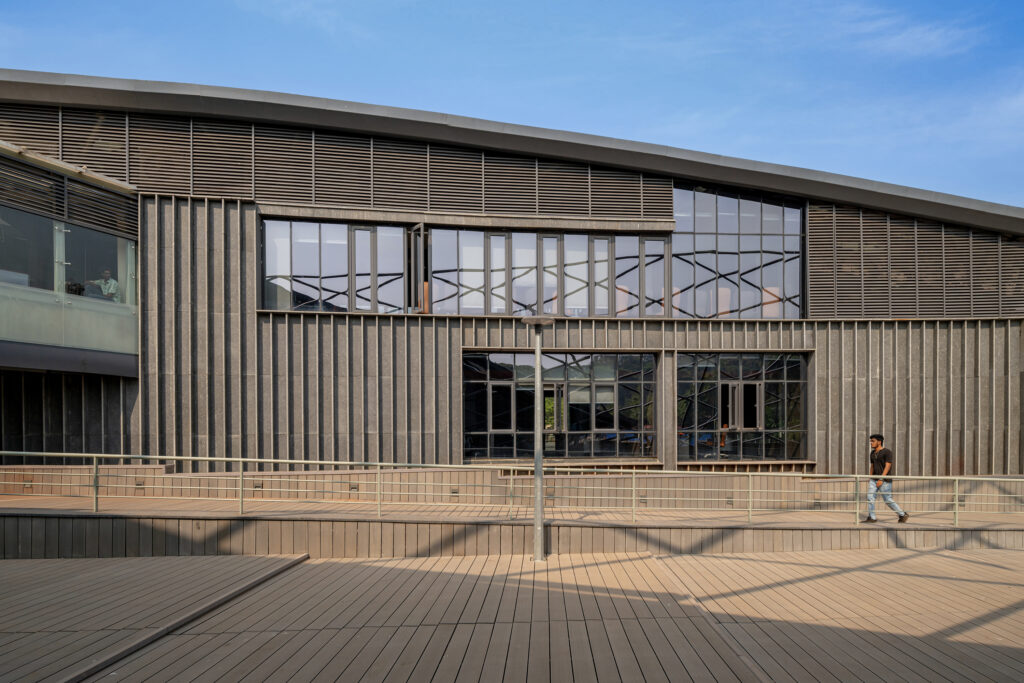
At ground level, robust materials such as local granite and laterite stone provide strength, resilience, and ease of maintenance. Above, a continuous roof structure unifies the entire campus, providing shade, weather protection, and a distinctive architectural identity.
The Iconic Wave-Inspired Mega Roof
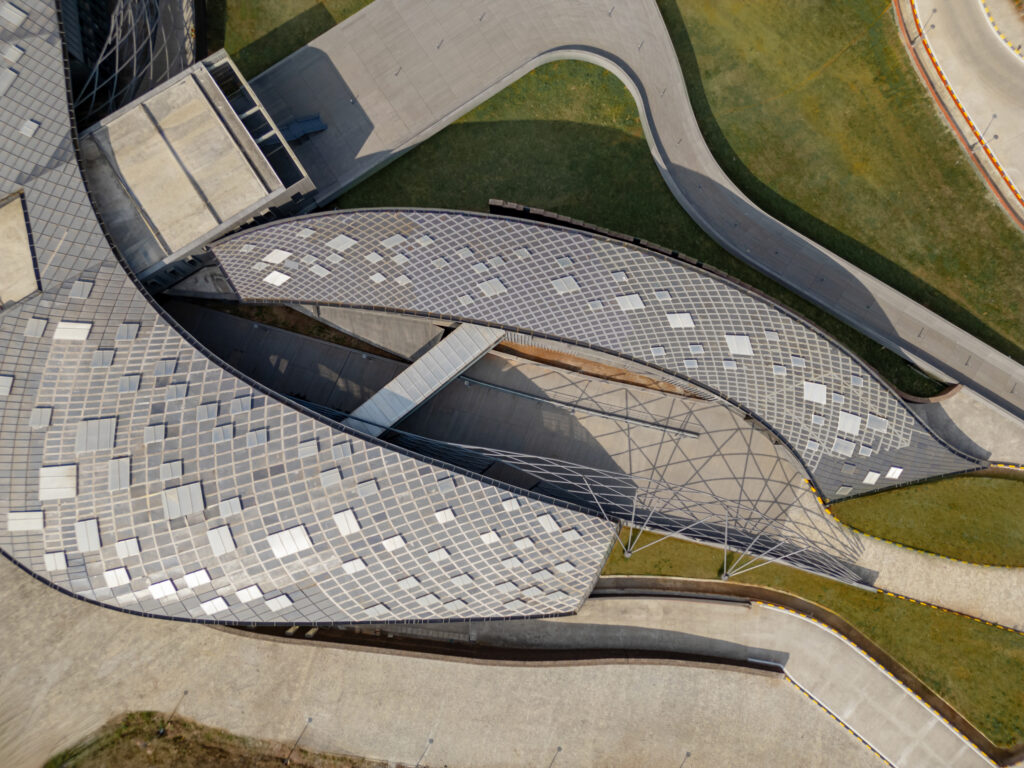
The defining feature of the National Institute of Water Sports is its digitally fabricated mega roof. Covering approximately 4,000 square meters, the lightweight grid-shell structure creates the visual impression of a wave sweeping across the campus.
The roof was engineered using trapezoidal paneling and a pressure-equalization strategy that enhances both structural efficiency and environmental performance.
Its construction involved:
- More than 15,000 steel pipes of varying lengths
- Over 5,000 customized CNC-fabricated roof panels
- Modular segments designed for manual handling and installation
- Integrated drainage channels concealed within the roof geometry
Each roof panel was uniquely fabricated and assembled like a giant three-dimensional puzzle. The modular approach allowed the complex form to be constructed efficiently within public-sector procurement constraints and local construction realities.
Beyond its visual impact, the roof functions as an environmental device, providing extensive shading, weather protection, and effective monsoon water management.
Delivering Design Excellence Within Budget Constraints
One of the most remarkable aspects of NIWS is its successful balance between architectural ambition and budget-conscious execution.
Project resources were strategically directed toward critical performance elements such as structure, durability, circulation, and environmental comfort rather than decorative finishes.
Complex architectural systems were broken down into repeatable and manufacturable components. Design teams coordinated closely with fabrication specialists and local contractors to ensure that digital precision could be translated effectively into on-site construction.
A combination of CNC manufacturing and local fabrication units enabled efficient production of modular roof components that were assembled manually into the final structure.
Climate-Responsive and Coastal Resilience Strategies
Given Goa’s coastal environment, resilience and long-term performance were fundamental considerations throughout the project.
The steel structure utilizes sandblasted corrosion-resistant steel protected by three layers of polyurethane coating to withstand saline exposure and harsh weather conditions.
Passive environmental strategies include:
- Deep overhangs and shaded circulation routes
- Natural cross-ventilation
- Orientation optimized to capture cooler sea breezes
- Protected outdoor learning and gathering spaces
These measures reduce heat gain and enhance occupant comfort while minimizing dependence on mechanical cooling systems.
Integrated Water Management
Water sustainability is integrated into the campus design through a comprehensive rainwater management strategy.
The mega roof incorporates continuous drainage channels that collect monsoon runoff and direct it toward a pond located beneath the entrance bridge. Stored rainwater is reused for landscape irrigation during Goa’s dry summer months, supporting responsible resource management and reducing water consumption.
Strengthening Tourism, Safety, and Local Communities
The National Institute of Water Sports serves a purpose far beyond education and training. It plays a vital role in strengthening India’s marine tourism ecosystem by establishing professional standards, supporting workforce development, and enhancing safety practices across the industry.
By formalizing training programs and creating opportunities for skill development, the institute contributes directly to local livelihoods and the long-term growth of coastal tourism.
At the same time, the campus provides Goa with a distinctive civic landmark that celebrates the region’s maritime identity and relationship with the sea.
The Vision Behind the National Institute of Water Sports
Every landmark project begins with a vision, and the National Institute of Water Sports is no exception. Conceived by architect Manish Gulati and his team at MOFA Studio, the institute was imagined as more than a training facility-it was envisioned as a living expression of Goa’s relationship with the sea.
The design emerged from a desire to capture the spirit of water itself. Rather than relying on literal nautical references, the architecture translates the qualities of the ocean-movement, rhythm, anticipation, and flow-into a built environment that feels dynamic and connected to its coastal setting.
At the heart of the concept was the belief that learning extends beyond classrooms. This idea shaped a campus where formal training, informal interaction, recreation, and observation seamlessly overlap. Every pathway, courtyard, bridge, and gathering space was carefully considered to encourage engagement, collaboration, and discovery.
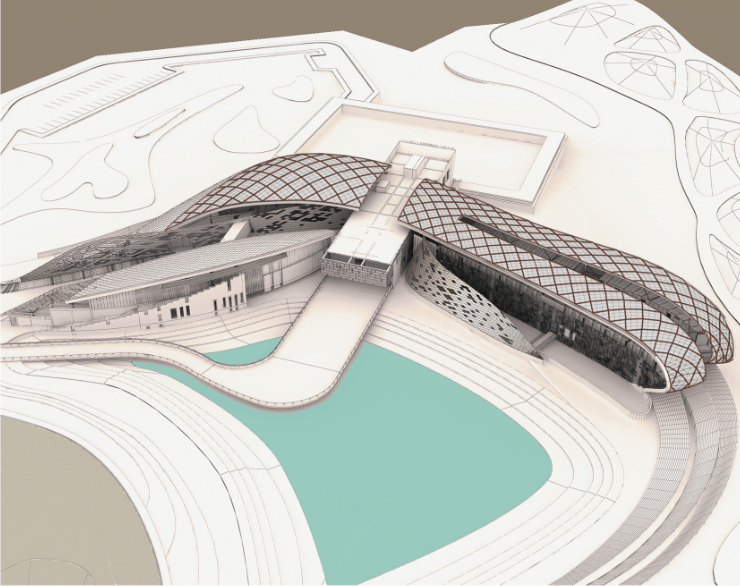
One of the most defining aspects of the project is its iconic wave-inspired roof, a bold architectural gesture that serves both symbolic and functional purposes. More than a visual statement, it reflects the institute’s identity while providing shade, comfort, and environmental performance suited to Goa’s tropical climate.
What makes the project particularly remarkable is the way architectural ambition was balanced with practical realities. Through innovative engineering, digital fabrication, and thoughtful planning, the design team transformed a complex vision into a buildable and durable public institution.
Today, the National Institute of Water Sports stands as a reflection of that vision-an institution where architecture, landscape, and purpose come together to create an environment that inspires learning, supports community, and celebrates India’s growing connection to water sports and marine tourism.
“Great architecture does not imitate its surroundings- it captures their essence.
At NIWS, the energy of the sea becomes an experience woven into every space.”
Conclusion
The National Institute of Water Sports represents a powerful example of how architecture can support education, tourism, community development, and environmental responsibility simultaneously. Through its wave-inspired design, innovative mega roof, climate-responsive planning, and carefully crafted learning environments, NIWS transforms the energy of the sea into a functional, inspiring, and future-ready campus.
As both a training institution and an architectural landmark, the National Institute of Water Sports demonstrates how thoughtful design can create places that are efficient, resilient, and deeply connected to their cultural and environmental context.
“Rooted in Goa’s maritime heritage, the National Institute of Water Sports transforms the energy of the sea into a dynamic environment for learning, training, and innovation.”
To read more such Latest News
visit our Homepage
Do Subscribe to our Youtube Channel InfraTalks